Themes of Product Management
Remember, the key to success is not doing more but doing what’s most important with laser-like focus.
By Jason Abdo
Product Management is a multifaceted discipline that stands at the crossroads of business strategy, customer empathy, technical innovation, and effective leadership. It's not just about launching a product but nurturing it to success by continuously iterating and refining the experience. The themes I've laid out below encapsulate the essence of what it means to be a product manager in today's fast-paced digital landscape. Whether you're an aspiring product manager or an experienced professional looking to sharpen your skills, understanding these core themes can act as a compass to guide you through the complex, yet rewarding world of product management. From cultivating a deep connection with customers to executing with precision and measuring performance, here's a roadmap to help you navigate the exciting journey ahead.

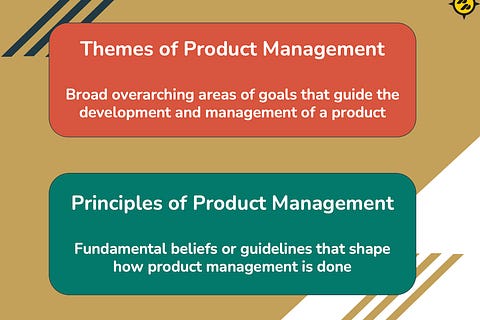
Themes of product management:
Customer focus & empathy
●Balance customer and business value.
●Build deep understanding of customer pain points, needs, and competitive offerings from direct and indirect competition.
●Collect requests from inside the company, consider feedback a gift, and ensure that viable requests impact backlogs and roadmaps.
●Proactively gather customer requests, prioritize them according to value and viability; keep consistent feedback loops with internal and external customers.
●Delight customers with invaluable experiences and make sure you iterate with empathy.
Strategy and vision
●Obsess about solving your customers’ problems.
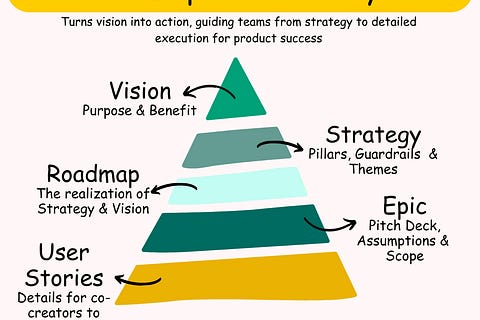
●Own, maintain, and share product vision, strategy, and roadmap.
●Understanding minimal viable product (MVP) vs. future-phase approaches for all projects to be delivered.
●Develop a deep understanding of the king KPIs, secondary data points, and strive to take a data-driven prioritization approach.
Team management
●Shield your team from nonpriority requests and interruptions, while managing external stakeholders’ expectations.
●Servant leadership focused on removing all hurdles for co-creators.
●Act as the “glue” for the team of talented designers, developers, and other roles that support the success of your product.
●Keep co-creators informed, aligned and accountable; they know the “story” of your product.
●Lead co-creators in the journey of the “Idea” all the way through to release into production and optimization cycles.
Execution and delivery
●Ensure predictable and timely delivery of features, functions, and capabilities.
●Translate customer problems & business needs into solutions represented as epics (comprehensive project briefs) and user stories.
●Make final call on decisions throughout the project; ensure the team makes the right technical and design tradeoffs.
●Communicate progress on product feature/function buildouts.
●Monitor team efficiencies for bringing product to production; discuss how you can remove any barrier to success.
Performance management
●Set goals tied to short-, medium-, and long-term business results and monitor.
●Own the prioritization of the backlog and roadmap for your co-creators.
●Provide teams transparency in product performance, team performance, and give visibility into perspectives from leadership.
●Understand what ROI the team is providing with the features and functions they release.
First published in Protege Pulse, the Product Protégé newsletter. Read it on Substack.